**A Glance Back in Time:** Overview of mid-century fashion trends and their influence on holiday wardrobes.
Mid-century fashion—spanning the 1940’s through the 1960’s—left an enduring mark on the way we dress for festive occasions today. The era was defined by elegant silhouettes, refined tailoring, and a sense of effortless glamour that still shapes modern holiday style.
In the 1940’s, wartime restrictions inspired practical yet polished looks: structured shoulders, cinched waists, and A-line skirts. These silhouettes remain popular in today’s holiday dresses, with many designers echoing the flattering hourglass shape.
The 1950’s brought full skirts, nipped waists, and luxurious fabrics. Modern holiday wardrobes often revisit this iconic femininity through swing dresses, tea-length gowns, and voluminous skirts that add drama to seasonal celebrations.
Moving into the 1960’s, style became more daring—sleek shift dresses, bold patterns, and mod influences took centre stage. Contemporary festive outfits still draw on this playful spirit, incorporating geometric prints, metallic accents, and clean lines.
Today’s holiday wardrobes blend these decades effortlessly, pairing vintage-inspired elegance with modern comfort. Whether it’s a 50s-inspired full skirt or a chic 60’s shift, mid-century fashion continues to shape the timeless festive looks we love.
**Iconic Fabrics and Styles:** Discuss popular materials like wool, silk, and velvet, and styles such as A-line dresses with intricate patterns and lace trims that were a hallmark of Christmas fashion in the mid-20th century.
Mid-20th-century holiday fashion was defined by luxurious fabrics and beautifully structured silhouettes that brought elegance to every festive gathering. Materials like wool, silk, and velvet dominated the season, each offering its own touch of sophistication. Wool provided warmth and structure, making it ideal for winter coats and tailored dresses. Silk added a soft, luminous quality, often reserved for eveningwear and special celebrations. Velvet—rich, plush, and deeply coloured—became a Christmas staple, appearing in everything from cocktail dresses to decorative trims.
Styles of the era emphasised graceful femininity and meticulous detail. A-line dresses were a signature silhouette, flattering on nearly every figure and perfect for holiday parties. These dresses often featured intricate patterns, including brocades, checks, and festive motifs that added texture and charm. Lace trims were another hallmark, softening edges and lending a romantic touch to hems, necklines, and sleeves.
Together, these fabrics and styles created a look that was both timeless and celebratory. Today, they continue to influence modern Christmas wardrobes, inspiring contemporary designers to revive the elegance and craftsmanship that made mid-century holiday fashion so memorable.
**Color Palette of the Era:** Explore the typical festive colors that dominated mid-century Christmas fashion, including traditional reds, greens, and golds worn during joyous gatherings.
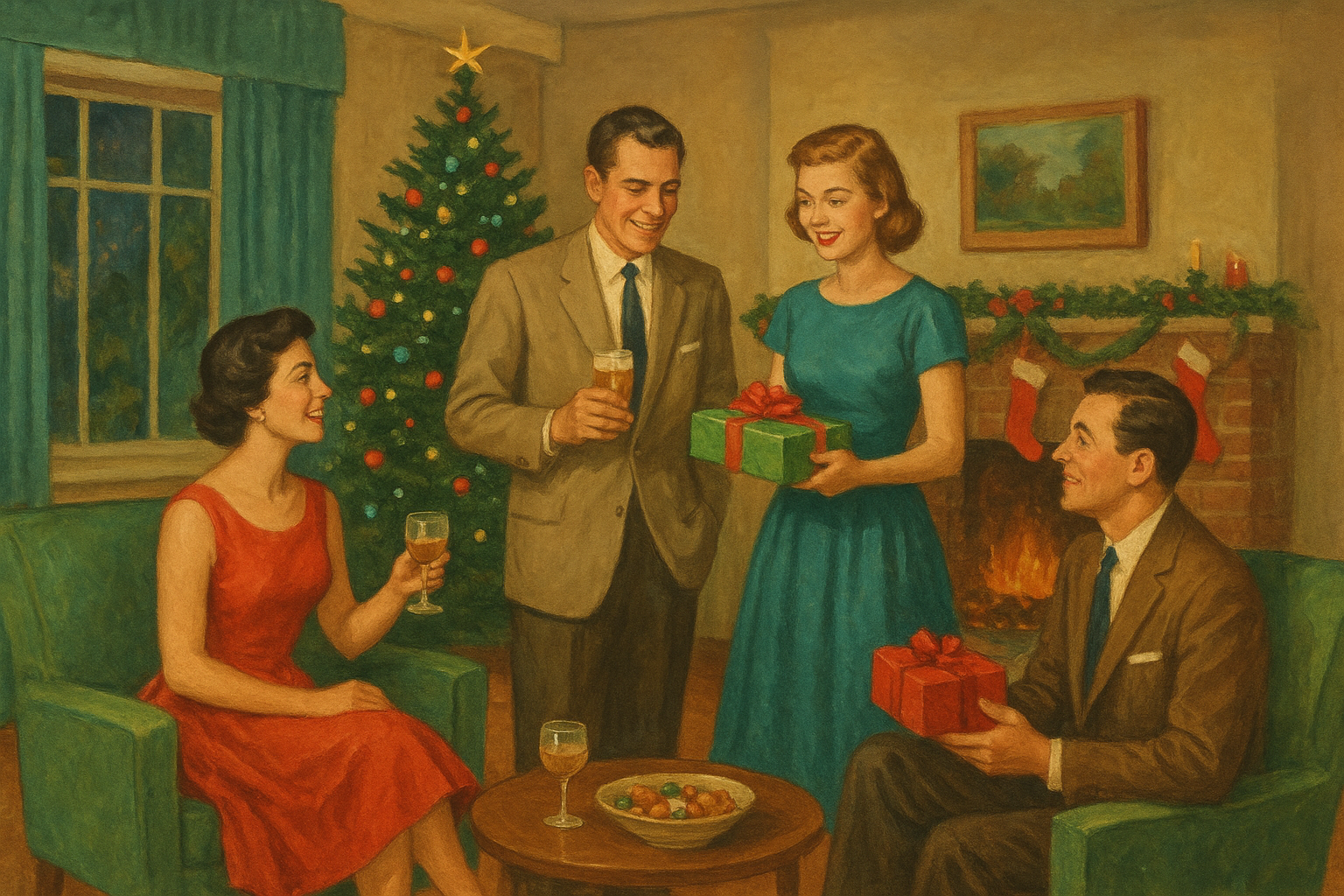
Mid-century Christmas fashion embraced a warm, joyful, and unmistakably festive color palette that set the tone for winter holiday gatherings. Traditional reds were the star of the season—ranging from deep cranberry to bright holly shades—symbolising warmth, celebration, and classic holiday spirit. These rich tones appeared in everything from velvet cocktail dresses to wool coats and accessories.
Greens provided the perfect complement, inspired by evergreen wreaths, pine trees, and winter foliage. Dresses and separates in emerald, forest, or muted olive created a sophisticated balance against the bold reds of the era, forming the quintessential Christmas pairing.
Mid-century Australian Christmas fashion (1940s-1960s) blended post-war elegance with the summer climate, featuring women in light cotton sundresses, shirtwaist dresses, or bright prints on full/circle skirts (like polka dots or novelty patterns), paired with wedges, sandals, and wide-brimmed hats.
- Dresses: Shirtwaist dresses (buttoned front), sundresses, and full circle skirts were popular for showing off vibrant patterns, perfect for festive occasions.
- Fabrics: Light cotton, linen, and rayons were ideal for the summer heat.
- Prints: Polka dots, gingham, tropical prints, and novelty Christmas patterns were fashionable.
- Accessories: Wedges, sandals, cat-eye sunglasses, and wide-brimmed sun hats were essential for outdoor celebrations.
- Festive Touches: Sometimes a more formal satin or organza dress (for evening/indoor) or a new dress received as a gift might be worn.
To elevate these foundational hues, mid-century fashion often incorporated gold accents. Gold thread, metallic brocades, beaded embroidery, and shimmering trims added a luxurious touch to party dresses and evening ensembles, making them sparkle under holiday lights. While silver was present, gold dominated as the glamorous choice for festive gatherings.
Together, these colors—warm reds, classic greens, and luminous golds—shaped the vibrant and elegant visual identity of mid-century Christmas style. Their timeless appeal continues to influence today’s holiday wardrobes, keeping the nostalgic charm of the era alive.
- **Accessorizing with Flair:** Examine the role of accessories, such as pearl necklaces, brooches, and gloves, in enhancing a Christmas outfit’s elegance and sophistication.
Accessories played a defining role in mid-century Christmas fashion, transforming even the simplest outfit into a polished, festive ensemble. During the 1940’s, 50’s, and 60’s, no holiday look was considered complete without thoughtfully chosen accents that added refinement and personality.
Pearl necklaces were a timeless favourite, symbolising grace and femininity. Whether worn as a single strand for understated charm or layered for added drama, pearls complemented the era’s structured silhouettes and luxurious fabrics, making them a go-to choice for Christmas dinners and cocktail parties.
Brooches also held a special place in mid-century wardrobes. Often designed in festive shapes—snowflakes, stars, bows, or florals—brooches added a sparkling focal point to wool coats, cardigans, and dress bodices. Their versatility allowed women to refresh outfits season after season with a single decorative piece.
Gloves provided the finishing touch, embodying the elegance of the time. From wrist-length satin gloves to longer opera styles for evening events, they added sophistication while keeping with the era’s polished standards of dress. Paired with matching handbags or hats, gloves elevated any Christmas look with effortless refinement.
Together, these accessories brought character, shine, and poise to mid-century holiday fashion—details that continue to inspire modern festive styling today.
**Why They Endure:** Explore the timeless appeal of mid-century Christmas fashion, reflecting on its continued fascination and inspiration for today’s holiday vintage dressing enthusiasts.
Mid-century Christmas fashion continues to captivate modern vintage enthusiasts because it blends elegance, nostalgia, and craftsmanship in a way few other eras can replicate. The styles of the 1940’s–1960’s offered a perfect balance of structure and softness—silhouettes that flattered the figure, fabrics that felt luxurious, and details that showcased true artistry. This combination created a festive aesthetic that remains instantly recognizable and endlessly inspiring.
Part of its lasting appeal lies in the sentimental charm of the era. Mid-century holiday attire evokes memories of classic Christmas movies, family gatherings, and a time when dressing up was an anticipated ritual rather than an afterthought. Wearing these styles today reconnects people with that sense of tradition and celebration.
Another reason these fashions endure is their versatility and timeless design. A well-cut A-line dress, a cocktail number such as the little black dress, or a strand of pearls never feels out of place. These pieces transition seamlessly into modern wardrobes, blending vintage character with contemporary comfort and personal expression.
Finally, mid-century holiday fashion thrives because it encourages individuality. Enthusiasts love the thrill of discovering unique pieces—vintage brooches, lace-trimmed dresses, or authentic fabrics—that carry history and personality. Each item becomes more than clothing; it becomes a story.
Together, these qualities ensure that mid-century Christmas fashion remains a beloved source of inspiration, inviting each new generation to rediscover and reinterpret its festive magic